Collecting Lincoln Cents
The complete collector's guide to Lincoln wheat pennies and memorial cents — key dates, the 1943 steel cent, doubled dies, grading tips, and what common dates are actually worth.
Introduction
The Lincoln cent has been in continuous production since 1909, making it the longest-running US coin design in history. More Lincoln cents have been struck than any other US coin — over 300 billion by some estimates — which makes common dates practically worthless and key dates genuinely scarce. That tension between extreme abundance and dramatic rarity is what makes Lincoln cents endlessly interesting to collect.
The series runs from the famous 1909-S VDB (one of the most collected US rarities) through the 1943 steel cents struck during wartime copper rationing, past the iconic 1955 doubled die error, and into the modern copper-plated zinc cents still in your pocket today. Whether you're building a date set on a tight budget or chasing certified key dates, there's a collecting approach at every price point.

The Series at a Glance
Lincoln cents have gone through four distinct design types on the reverse:
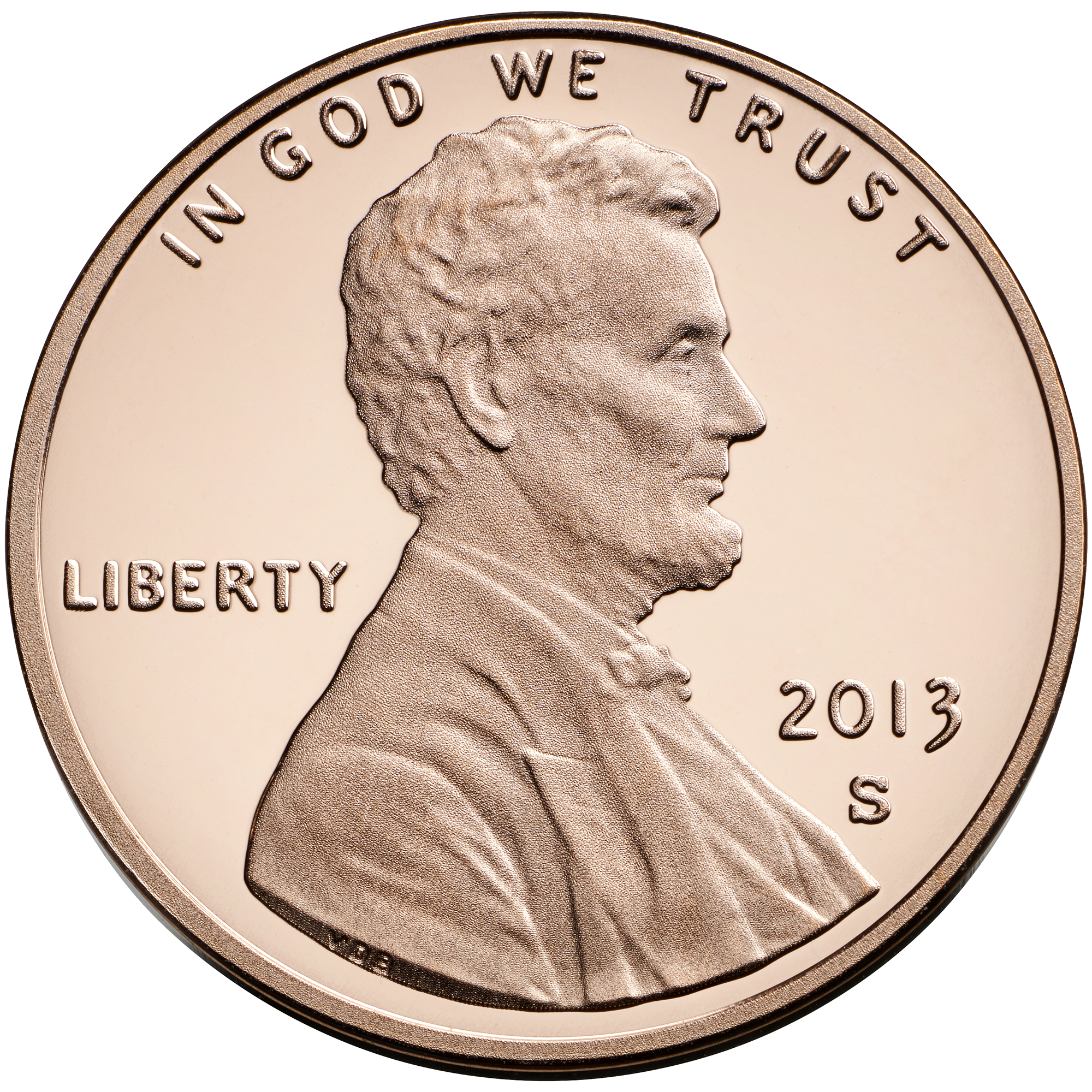
- Wheat Ears (1909–1958)— The original Lincoln cent reverse, designed by Victor D. Brenner. Two wheat stalks flank the words ONE CENT / UNITED STATES OF AMERICA. These are called "wheat cents" or "wheaties." The obverse features Brenner's portrait of Lincoln — the first time a real person appeared on a circulating US coin.
- Lincoln Memorial (1959–2008)— Introduced for Lincoln's 150th birthday, the memorial reverse was designed by Frank Gasparro. These are the most commonly found Lincoln cents. The key to look for: within the memorial engraving, a small Lincoln figure is visible if you use a loupe.

Memorial reverse (1959–2008) — Denver Mint 2005 - Lincoln Bicentennial (2009)— Four reverse designs issued in 2009 for the 200th anniversary of Lincoln's birth: Birth and Early Childhood, Formative Years, Professional Life, and Presidency. Each was struck in both the old 95% copper composition (collector sets) and the modern copper-plated zinc (circulation).
- Shield (2010–present)— The current reverse, designed by Lyndall Bass, features a Union shield representing Lincoln's preservation of the United States.
Key Dates
A handful of Lincoln cents command significant premiums. These are the coins collectors chase and the ones most commonly counterfeited:
- 1909-S VDB— The crown jewel. "VDB" refers to designer Victor D. Brenner's initials, which appeared prominently on the reverse of the first-year cents. Public objection to the prominent initials led the Mint to remove them after just 484,000 San Francisco coins were struck — making the 1909-S VDB instantly scarce. Even heavily worn examples bring $700–$800; high-grade specimens command thousands.
- 1909-S (no VDB) — Scarcer than the 1909-S VDB in Mint State despite being less famous. Worth $100–$200+ in circulated grades; premium in high grades.
- 1914-D — The key date of the wheat cent series after the 1909-S VDB. Low Denver mintage of 1.19 million. Worth $200–$300+ in lower circulated grades; well over $1,000 in Fine or better. Frequently faked — buy certified.
- 1922 plain (no D)— Denver-only year with a die variety where the mint mark disappeared. A true "plain" 1922 (no mint mark visible, not just weak) brings $500+ in Good condition.
- 1931-S — Low mintage of 866,000. Worth $80–$100+ in circulated grades. One of the more accessible semi-keys for budget collectors.
- 1943 copper— The most valuable Lincoln cent ever. All 1943 cents were supposed to be steel-plated zinc due to WWII copper rationing, but a small number of copper planchets were accidentally struck. Fewer than 40 are known. Authenticated examples sell for $250,000–$1,000,000+. Fakes are extremely common — test any suspect 1943 cent with a magnet (copper won't stick; steel will).
- 1944 steel — The reverse of the 1943 error: some 1944 cents were accidentally struck on leftover steel planchets. Fewer than 30 authenticated examples are known. Value comparable to the 1943 copper.
Major Error and Variety Coins
Lincoln cents produced more famous varieties than virtually any other US coin series:
- 1943 steel cents — Not errors, but historically significant: all three mints (Philadelphia, Denver, San Francisco) struck cents on zinc-coated steel planchets in 1943 to conserve copper for the war effort. These are common, affordable, and fascinating history. Value: $0.25–$5 circulated, $3–$30 uncirculated.
- 1955 doubled die obverse — The most famous US coin variety. The obverse shows dramatic doubling of the date and LIBERTY, visible without magnification. Even heavily worn examples bring $1,000+. Only buy certified.

1955 doubled die — doubling on the date and LIBERTY is visible to the naked eye - 1969-S doubled die obverse— Rarer than the 1955. The Treasury Department initially called them counterfeit (they're not). Fewer than 100 are known. Value: $25,000–$75,000 certified.
- 1972 doubled die obverse — More available than 1955 or 1969-S, but still genuinely scarce and dramatically doubled. Value: $300–$600 circulated.
- 1960 large date / small date — Both Philadelphia and Denver struck two date sizes in 1960. The small date is worth a modest premium. An easy variety to attribute yourself.
- 1982 large date / small date copper and zinc — The 1982 transition year produced up to seven varieties (both date sizes, both compositions, both mints). Worth attributing if you find them in circulation; the copper small date 1982-D is genuinely scarce.
Grading Lincoln Cents
Lincoln cent grading focuses on wear on the high points of Lincoln's portrait. Key areas to evaluate:
- Cheekbone and jawline — The first areas to show wear in circulated grades. In AU grades, look for slight friction on the cheek; in circulated grades, how much detail remains here determines Good/VG/Fine/VF/EF.
- Hair above the ear and temple— The hair strands separate in EF and VF grades; they begin to merge in Fine; they're mostly smooth in Good.
- Rim sharpness — Lincoln cents are particularly sensitive to weak strikes. Even uncirculated coins can have mushy rims from worn dies, which affects grade.
- Contact marks in Mint State — In MS grades, the cheek is the most mark-sensitive area. MS-63 coins have scattered marks on the cheek; MS-65 coins should have clean cheeks with only minor marks in non-focal areas.
- Luster — Original red (RD) luster is the highest designation; red-brown (RB) indicates partial luster loss; brown (BN) means little or no original mint color remains. RD commands a meaningful premium at all Mint State grades.
The Steel Cent Story
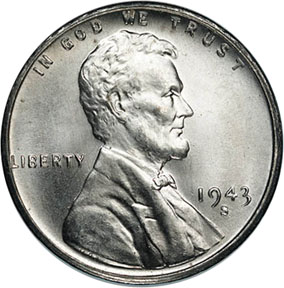
In 1943, the United States was at war and copper was needed for ammunition casings and electrical equipment. The Mint struck all three cents on zinc-coated steel planchets — a dramatic departure from 75 years of copper cent production. The result was a cent that was clearly different: slightly lighter (2.70g vs 3.11g for copper cents), magnetic, and prone to corrosion from the zinc coating.
Most 1943 steel cents are very common — Philadelphia alone struck 684 million. Cleaned or corroded examples sell for $0.25; choice uncirculated specimens in MS-65 can bring $50–$200. The exception is the rare 1943 copper cent struck on leftover copper planchets (described under key dates above) — a simple magnet test distinguishes them instantly.
Counterfeit and Altered Coins to Know
Several Lincoln cents are frequently faked or altered, and the approach is consistent: a common coin is modified to resemble a rare one.
- Added S or D mint marks — A 1909 Philadelphia cent (no mint mark) can be altered to resemble a 1909-S by adding a fake S. The same is done to create fake 1914-D cents from common 1914 Philadelphia coins.
- Removed D from 1922-D— A 1922-D with the D tooled away is the most common fake "1922 plain." Certified examples are the only safe purchase.
- Plated 1943 copper fakes — Copper-plating a 1943 steel cent. A magnet catches this instantly; genuine 1943 copper cents are not magnetic.
- Machined-doubled dates — Machine doubling (from die bounce, not a true doubled die) creates shelf-like doubling worth nothing. True hub-doubled varieties like the 1955 DD show rounded, distinct doubling. Only buy certified examples of the major doubled dies.
See our counterfeit detection guide for broader techniques that apply to all coin types.
Sets to Build
Lincoln cents offer collecting goals at every budget:
- Circulated wheat set (1909–1958) — One circulated example of every Philadelphia, Denver, and San Francisco date. Excludes the most expensive key dates or accepts them in low grade. Budget: $200–$500 for a nice set skipping the top keys; $1,000–$3,000 including worn examples of all key dates.
- Mint State wheat set — The challenge version. Key dates in MS-63 or better are expensive; the 1914-D in MS-63 alone costs $3,000+. Budget for a complete MS set: $15,000–$50,000+.
- Memorial cent set (1959–2008) — Very affordable in circulated grades — most dates are worth face value. The challenge is finding high-grade examples of the harder proof and Special Mint Set issues.
- Type set — One example of each design type (Wheat, Memorial, Bicentennial four-reverse set, Shield). Can be done in circulated condition for under $20, or in choice uncirculated for $50–$200.
- Error and variety set — Build around the major doubled dies, off-metals, and repunched mint marks. Can range from $50 (common RPMs) to five figures (1955 doubled die, 1969-S doubled die).
Where to Buy and Sell
Common Lincoln cents are everywhere. Key dates require more care in sourcing:
- Coin shows — The best place to examine coins in hand and compare prices from multiple dealers. Common dates are often inexpensive at shows; key dates are available from specialty dealers who know what they have.
- Coin dealers — Local shops often have wheat cent rolls and date runs. Online specialists carry certified key dates.
- Major auction houses — Heritage, Stack's Bowers, and Great Collections regularly offer high-grade and key-date Lincoln cents. Auction is typically the best venue for selling significant examples.
- eBay — Acceptable for common circulated wheats and modern cents. Use extreme caution for any key date or variety; the majority of "1955 doubled die" offerings on eBay are either fakes or machine-doubled coins with no premium value.
For selling: dealers typically pay 50–70% of retail for common circulated wheats and more for desirable key dates and high-grade material. See our coin selling guide for pricing expectations.