NGC Certifies a Trump Dollar Error Set With the Paper That Caused It
A 2026 Trump dollar struck through a paper fragment, and the fragment itself, are now an NGC two-piece set. What to check in your Mint rolls and bags.
Written by Admin User
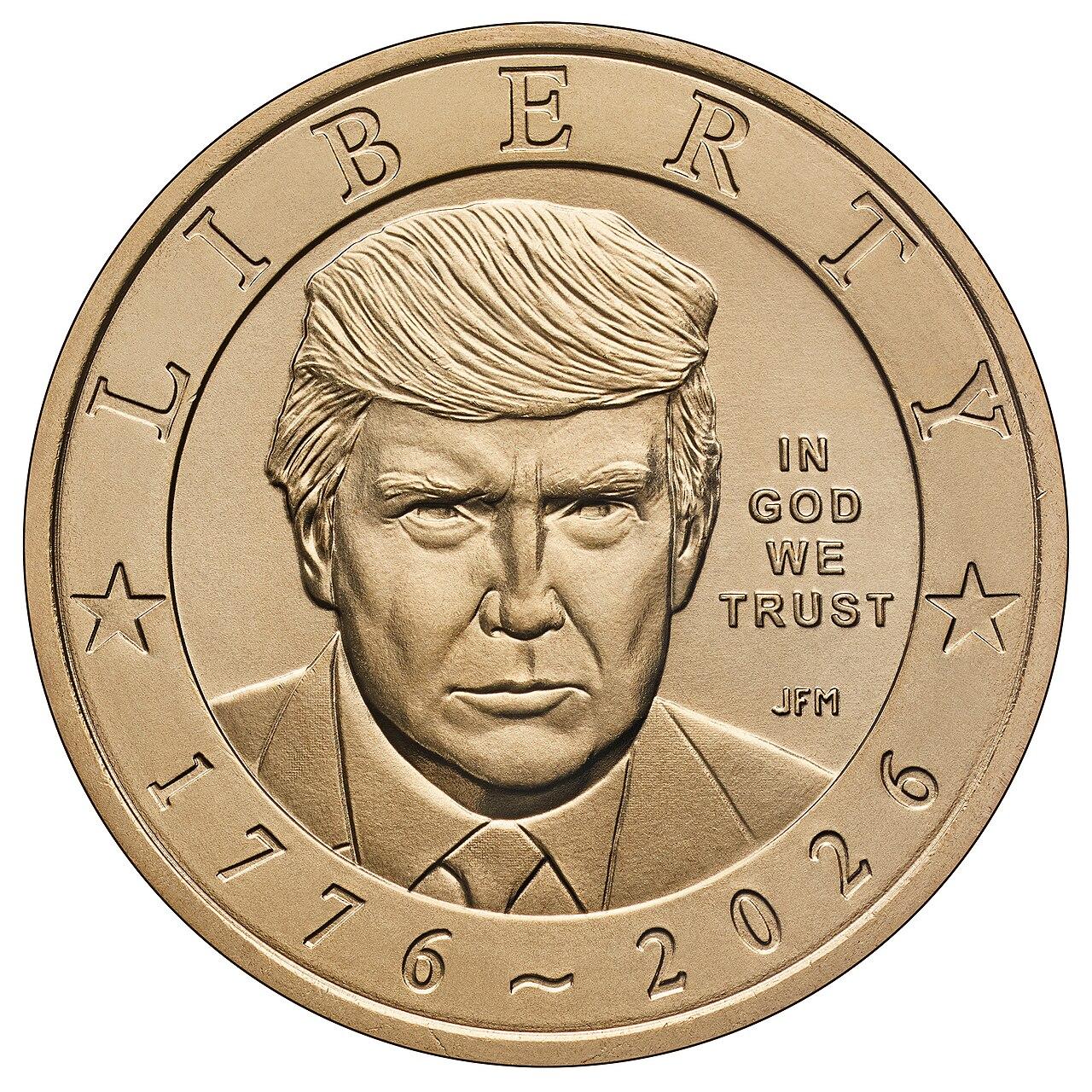
A collector hunting through United States Mint rolls of the 1776–2026 President Donald J. Trump dollar for a missing clad layer found something else instead: a dollar struck through a piece of paper, with the paper still there. Numismatic Guaranty Company (NGC) has graded the coin MS 66 and certified the fragment as the second piece of a two-piece set. It is the second major error type reported on the coin since October, and it lands the same week the Mint began selling the dollar in 1,000-coin bags.
What was found
Mint error specialist Mike Byers announced the discovery on his MintErrorNews site on November 19, and CoinWeek reported it on November 20. According to both accounts, the coin came out of a roll purchased directly from the Mint.
The struck-through area covers part of the president's forehead and hair on the obverse and runs to the rim at about the two o'clock position. The object that caused it is a fragment of multilayered, metallic-looking paper with adhesive. Byers writes that it was stuck to the planchet before striking, so the obverse die pressed it into the coin. The fragment carries partial lettering that reads "mit T," and the T of LIBERTY struck through onto it. Under magnification, detail from the hair and eye also shows on the paper.


Byers suggests the paper may have come from a Mint label. NGC's Dave Camire, the service's senior vice president of conservation and grading and its mint error authenticator since 1999, was less sure. He called it "quite a challenge to figure out" what was on the planchet and invited readers to try.
NGC's label describes the coin as an obverse struck-through paper fragment error. CoinWeek lists the certification numbers as 8921459-001 for the dollar, marked piece 1 of 2, and 8921459-002 for the fragment, piece 2 of 2. CoinWeek also reports a $7,500 asking price for the set, and notes that this is a seller's figure rather than an auction result.
Why the paper matters
Struck-through errors are common. NGC's own explainer says they happen whenever foreign material gets between the die and the planchet, and most are tiny specks of dust or debris. A coin with a nearly invisible struck-through can still grade 70, but it will not get a Mint Error notation. Large struck-throughs are the opposite: NGC will attribute them as mint errors, but they are not eligible for MS 70. NGC does not deduct points for the error itself, which is how a Singapore 50-cent piece struck through a piece of string earned an MS 64 with a Mint Error label.
Byers makes the same point from the market side. Struck-through coins are not rare, and their value depends on what the coin was struck through and whether the obstruction survived. Usually it does not. Here, the fragment stayed with the coin all the way through packaging in a Mint roll, and NGC encapsulated both pieces.

For a sense of what dramatic struck-through coins have brought at auction, NGC's 2024 Mint Error Coin Chronicles listed several Heritage results for NGC-certified examples:
| Coin | NGC grade | Price | Sale |
|---|---|---|---|
| 1813 $5 gold, reverse struck through | Mint Error MS 64 | $30,000 | April 2020 |
| 1995-W Silver Eagle, obverse struck through | Mint Error PF 69 Ultra Cameo | $3,001 | January 2024 |
| 1928 $20 gold, obverse struck through | Mint Error MS 66 | $3,000 | August 2022 |
| 1879-CC Morgan dollar, reverse struck through | Mint Error XF 45 | $1,200 | September 2018 |
None of those came with the object that caused the error, and none is a modern dollar, so they are context rather than comparables.
The missing clad layer hunt that led here
The collector was searching for the error that started all of this. CoinWeek first reported a Trump dollar missing its obverse clad layer on October 7. NGC graded that coin MS 65 with an Advance Releases designation. Its obverse shows the copper core while the reverse keeps its normal golden color, and it weighs 6.1 grams against 8.1 grams for a normal dollar. The discovery coin carried a $25,000 asking price through Mike Byers Inc. and was featured in the November 2 issue of Coin World.
By October 15, CoinWeek's running roster had grown to three. Florida collector P. Dolan found the second in a 100-coin Mint bag on October 10, weighing about 6.0 to 6.1 grams, in a bag that also held four July 4 privy mark dollars. Tyrone Kemp reported the third. Both of those remain raw and are not for sale.
Camire told Byers that NGC has now seen three error types on submitted Trump dollars: struck-throughs, missing clad layers, and improperly annealed planchets. His explanation for the run of finds is volume. In his words, "hundreds of thousands of coins are being distributed and searched."
That volume cuts both ways. CoinWeek cautions that most copper-colored Trump dollars circulating on social media are not missing a layer. Many weigh about 8 grams and may simply be discolored or improperly annealed. Byers estimates some of those might trade in the $50 to $100 range, and an unusual color alone does not make a coin a certifiable error.
The coin, and how many are out there
The Trump dollar is a one-year Semiquincentennial issue. Chief Engraver Joseph Menna designed the portrait from an official White House photograph by Daniel Torok, and the reverse carries Frank Gasparro's Presidential Seal with 250 on the eagle's shield. Philadelphia struck the coins without a mint mark in golden manganese brass that contains no gold. They are legal tender but were never released into circulation, only sold in numismatic products.

Sales opened September 2 with 25-coin rolls limited to 150,000 and 100-coin bags limited to 50,000. CoinNews reported opening-day sales of 148,524 rolls and 49,604 bags, with bags gone in under an hour. The Mint's latest sales report, published by CoinNews on November 19, shows 149,896 rolls and 49,915 bags sold. The Mint also struck 250,000 dollars on July 4 with a privy mark and mixed them randomly into those products.
On November 19 the Mint added 1,000-coin bags at $1,350, or $1.35 a coin, with a limit of 15,100 bags, two per order, and a $15 or $30 shipping charge for the roughly 20-pound packages. That is up to 15.1 million more coins for searchers. The same day it released the $250 one-ounce gold proof version at $4,890 with a 75,000 limit.
What to check in your rolls and bags
CoinWeek's advice for anyone opening Trump dollars:
- Weigh them. A normal dollar is 8.10 grams. The certified missing clad layer coin is 6.1 grams. Color alone proves nothing.
- Look at the strike. Check for indentations, missing design details, or areas where something appears to have interrupted the strike, especially the portrait, inscriptions, and rim.
- Leave it alone. Do not clean a suspect coin or remove attached material. Photograph both sides and get an error specialist's opinion before submitting it.
- Expect false alarms. Damage from handling, packaging, or storage can mimic an error.
Where to see errors at a coin show
Error dealers and grading-service representatives are the fastest way to get a second opinion on a suspicious coin. Florida, where the second missing clad layer surfaced, has two shows coming up: The Collectorama Coin Show in Lakeland, December 3 to 5 with free admission, and FUN Winter 2027 at the Orange County Convention Center in Orlando, January 7 to 10. In Pennsylvania, the Thanksgiving National Battlefield Coin Show in Gettysburg, Pennsylvania, runs November 27 and 28 with free admission and free appraisals. Browse every upcoming Florida show or find a coin show near you.