Fake 1914 Chinese Dollar in a Slab Reportedly Passed eBay's Coin Check
A CoinWeek report says a counterfeit Yuan Shikai dollar cleared eBay's Authenticity Guarantee. What the program covers and how to verify a slab.
Written by Admin User
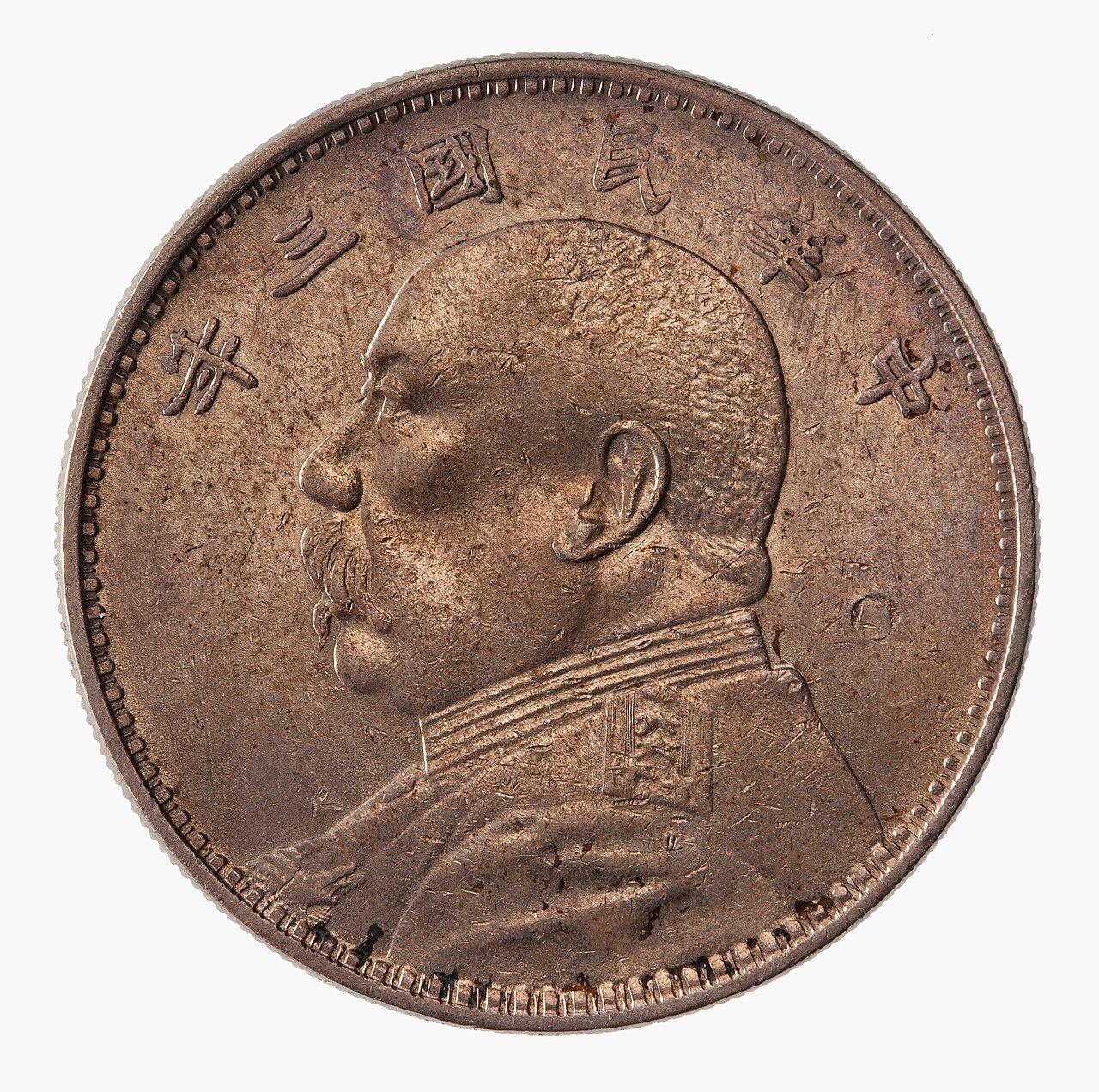
A counterfeit 1914 Chinese silver dollar in a slab labeled NGC AU 58 reportedly cleared eBay's coin authentication program last month, according to a CoinWeek report published Nov. 14. The buyer says eBay has since removed the listing and refunded the sale, but neither eBay nor PCGS, which eBay uses for coin authentication, has explained how the coin got through. For collectors who buy slabbed coins online, the case is a reminder of what a third-party check does and does not cover.
What was reported
The article, by Jack D. Young of the Dark Side Group, describes a Republic of China Year 3 (1914) Yuan Shikai silver dollar, listed as variety L&M-63C "Circlet in Ribbon Bow" (KM-Y329.4) in an NGC AU 58 holder. The genuine type is .890 fine silver, weighs 26.4 grams, measures 39 mm, and has a reeded edge.
A U.S. eBay listing dated Oct. 14, 2026 offered the coin for $750 or best offer. CoinWeek notes that its screenshot does not show what the buyer actually paid. The slab carried an eBay Authenticity Guarantee label with a QR code, and scanning it showed a check dated Oct. 19, 2026.
The buyer raised concerns in a PCGS Facebook discussion, and Young then reviewed more photos. He reported differences in the holder labels, inserts, and retaining prongs, as well as differences in the coin's details compared with NGC's reference images. He also questioned one reverse character, while cautioning that a single shape does not by itself prove a restrike or a counterfeit.


What happened after
According to the buyer, eBay removed the listing and refunded the purchase. Young said he had no independent confirmation of that from eBay or PCGS, so treat it as the buyer's account rather than a confirmed outcome.
Young also described an earlier case. A seller in Australia listed the same coin at AU$380, marked sold, with NGC certification number 6765609-009 and a grade of AU 58. NGC's record for that number carried a "Possible Counterfeit Holder" alert. Young reported the listing through eBay's Expert Network and it disappeared. He is clear that this second case is not an authentication failure, because eBay's coin program requires both buyer and seller to be in the United States.
How eBay's coin authentication works
eBay says its Authenticity Guarantee for coins covers graded U.S. coins, graded world coins (including Canadian coins), and raw U.S. coins priced at $500 or more. Eligible listings carry a blue badge. After a sale, the coin goes to PCGS for a multi-point physical inspection and is then shipped to the buyer with a tamper-proof tag bearing a QR code. eBay says there is no extra fee for buyers or sellers.
On what the check covers, the sources differ in emphasis. eBay's announcement says the inspection looks at authenticity, overall condition, and whether the coin matches the listing. Young's report says that for graded coins the process checks the holder and label against the listing and does not routinely regrade the coin. Either way, a counterfeit holder is exactly the kind of problem the process is supposed to catch, which is why this report drew attention.
Young said he bought five other suspect coins as tests, and that in all five eBay's process identified the counterfeits and refunded him.
What collectors can do
NGC's help center describes how to verify a slab. You enter both the certification number and the grade on NGC's verification page, and only coins NGC has shipped are searchable. A "Possible Counterfeit Holder" alert means NGC has seen a counterfeit or tampered holder using that number, and NGC asks owners to contact customer service, which is free.
Young's recommendations line up with that. Verify the certification number with the grading company, compare the coin and slab against the company's certification photos, and take any warning about a copied number seriously. A matching number alone is not proof, since a fake holder can reuse a real number.
If NGC confirms a holder is fraudulent, it photographs the holder, removes the coin, and returns the coin with a letter and the images. It does not return the counterfeit holder parts. NGC also says it can sometimes confirm a holder from high-resolution images, and in other cases needs to examine it in person.

Where to check a slab in person
A coin show lets you hold a slab beside a loupe and a phone with the grading company's verification page open, and ask dealers what they check before they buy. Upcoming shows include the Michigan State Numismatic Society 70th Annual Fall Convention and the Augusta Coin Club 2026 Fall Coin Show, both listed for Nov. 20. You can also browse Michigan shows or Georgia shows, or find a coin show near you.