New Law Opens the Door to Cheaper Nickels, and Lets Treasury End Other Coins
The Common Cents Act authorizes zinc-core nickels and lets Treasury stop making other circulating coins. No change is scheduled; nickels cost 13.31¢ each.
Written by Admin User
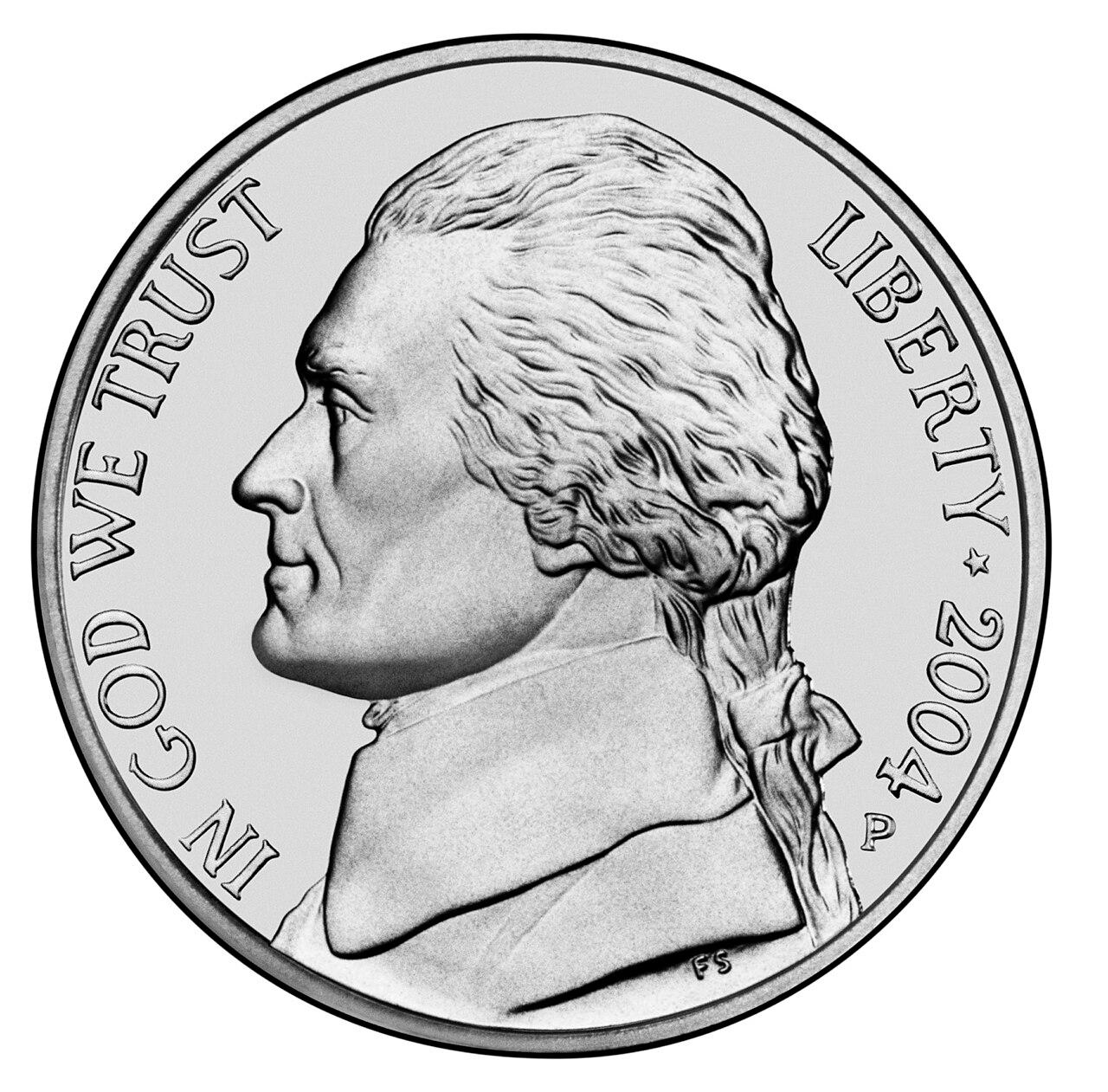
The Common Cents Act did more than end the penny. According to CoinNews, the law President Trump signed on Nov. 20 also lets the U.S. Mint make nickels with a zinc core and an outer layer of nickel, and it gives Treasury the power to stop making other coins for circulation. Nothing changes at your local coin show yet, but the five-cent coin is now the next denomination under the microscope.
What the law says about the nickel
The Jefferson nickel is 75% copper and 25% nickel, an alloy used for the five-cent piece since the Shield nickel arrived in 1866, apart from the wartime silver issues. CoinNews reports that the new law authorizes an alternative: an inner layer of zinc with an outer layer of nickel, in proportions Treasury would decide after testing.
Weight rules differ by recipe. The traditional copper-nickel coin stays at 5 grams. A zinc-and-nickel coin could weigh between 4 and 6 grams. Before adopting the new materials, Treasury must evaluate the savings and whether the coin works in vending machines and other coin-accepting equipment.
The law does not require a change, and CoinNews says no timetable has been announced. It also requires no redesign, so a new metal would not necessarily change how the nickel looks.

Why the nickel is next
The motive is cost. CoinNews, citing the Mint's 2025 Annual Report, says the average cost to make and distribute a nickel fell to 13.31 cents in fiscal 2025 from 13.78 cents in fiscal 2024. That is still more than 2.5 times face value. The nickel has cost more than five cents to produce since fiscal 2006, which CoinNews counts as 20 straight years of negative seigniorage.
| Coin | FY 2022 | FY 2023 | FY 2024 | FY 2025 |
|---|---|---|---|---|
| Penny | 2.72¢ | 3.07¢ | 3.69¢ | 3.02¢ |
| Nickel | 10.41¢ | 11.54¢ | 13.78¢ | 13.31¢ |
| Dime | 5.03¢ | 5.30¢ | 5.76¢ | 6.77¢ |
| Quarter | 11.11¢ | 11.63¢ | 14.68¢ | 14.53¢ |
| Half dollar | 17.15¢ | 25.98¢ | 33.97¢ | 27.81¢ |
Cost to produce and distribute each coin, from U.S. Mint annual reports as tabulated by CoinNews.
In fiscal 2025 nickels lost $50.9 million on the coins shipped, up from $17.7 million the year before. Pennies lost $95.6 million, so the two coins together accounted for $146.5 million in negative seigniorage. Dimes and quarters still made money, with $42.7 million and $130.5 million in seigniorage respectively. Overall circulating-coin seigniorage fell to $34.2 million from $99.5 million.
What the Mint has already studied
Alternative metals are not a new idea. CoinNews notes that the Mint's 2024 Biennial Report to Congress, released in July 2025, identified an alloy of 80% copper and 20% nickel as ready for congressional authorization. The report estimated that alloy could have saved about $2.5 million across nickels, dimes and quarters at 2024 production levels, roughly $600,000 of it on nickels.
The zinc-based approach was in earlier versions of the Common Cents Act. CoinNews says a 2025 House Financial Services Committee report pointed to Mint and private-sector testing that indicated compatibility with existing coin-handling equipment, and to zinc's much lower cost than copper and nickel. It also flags a caution: earlier Mint experiments with plated zinc ran into durability problems, including edge deformation and exposed zinc cores. That is why testing comes before any switch.
Treasury can now end other coins
A separate provision lets Treasury stop minting other denominations for circulation. Before doing so, the Treasury secretary must give the House Financial Services and Senate Banking committees at least 60 days' notice with the fiscal and operational reasons and a full phaseout plan. Treasury must then brief the committees within 30 days of that notice.
No other denomination is discontinued today. But as CoinNews points out, the same law that opens the door to cheaper nickels also allows Treasury to end nickel production for circulation, subject to those notice rules.
The penny side of the law
The Hill reports that the Mint stopped making pennies about a year ago, and that the law makes the change permanent. Pennies remain legal tender, and the Mint expects to save about $56 million a year in material costs, though it will still make a limited number for collectors. The bill passed the House by voice vote and cleared the Senate without objection.
The law also sets a federal standard for cash rounding. Businesses may round cash totals to the nearest nickel when they cannot make exact change, for example $10.08 up to $10.10 or, if they choose to favor the customer, down to $10.05. Card and other noncash payments are unaffected. Yahoo Finance reports that the law largely codifies Treasury guidance issued in December 2025, and that Congress passed it on Sept. 28.

What it could mean for collectors
CoinNews offers one comparison: if Treasury adopts the new composition, copper-nickel and any future zinc-core nickels could become separate collecting categories, much as wartime silver nickels are today. Those wartime coins used 56% copper, 35% silver and 9% manganese from late 1942 through 1945. The law itself creates no new variety and does not direct the Mint to change anything, so this is possibility, not a forecast.

Where to talk it over at a coin show
The long Thanksgiving weekend is a busy stretch for local shows, and the penny and nickel changes will likely come up at dealer tables. A few on our calendar: the Thanksgiving National Battlefield Coin Show and the Westchester Coin & Stamp Show, both listed for Nov. 27, and the Black Friday Coin Show in Oklahoma on Nov. 28. To find one near you, browse all upcoming shows.