Stack's Bowers Rarities Night: 1794 Dollar, 1792 Half Disme Lead Nov. 17 Sale
An Alabama family's 1792 half disme, 1794 dollar and Proof 1862 $20 headline Stack's Bowers' Nov. 17 Rarities Night, with viewing in Baltimore.
Written by Admin User
Stack's Bowers Galleries will offer some of the most storied early American coins of the year on Tuesday, November 17, when Rarities Night opens as Session 2 of its November 2026 Showcase Auction. Several headline lots come from a consignment the firm describes only as "Property from an Alabama Family." Collectors heading to Baltimore this week can examine the lots in person before bidding starts.
The schedule
Rarities Night starts at noon Pacific (3 p.m. Eastern) on November 17, according to CoinWeek. The live sessions are held at Griffin Studios in Costa Mesa, California, and the Baltimore show is a preview stop, not the sale venue. CoinWeek and CoinNews both report 11 live and online sessions spread across November 16–20 and November 23–25. The dedicated session for Part II of the Mack C. Chase Collection of Walking Liberty half dollars follows on November 18.
Lot viewing runs Tuesday, November 10, through Friday, November 13, from 9 a.m. to 5 p.m. in Room 307 of the Baltimore Convention Center, during the Whitman Baltimore Coin Expo. No pre-sale estimates for the lots below appear in the coverage we reviewed.
The Alabama Family coins
The E-Sylum (November 8) reprinted catalog descriptions for several Rarities Night lots. The Alabama Family coins run from the first federal silver of 1792 to Civil War-era Proof gold.
- 1792 half disme, NGC MS-65: Cataloged as LM-1, Judd-7. The catalog recounts how Thomas Jefferson took delivery of 1,500 half dismes on July 13, 1792, and recorded giving several to children on his ride home to Monticello. This coin's provenance runs through the John Work Garrett collection at Johns Hopkins University (sold in March 1981) and the 1989 sale of violinist Jascha Heifetz's coins.
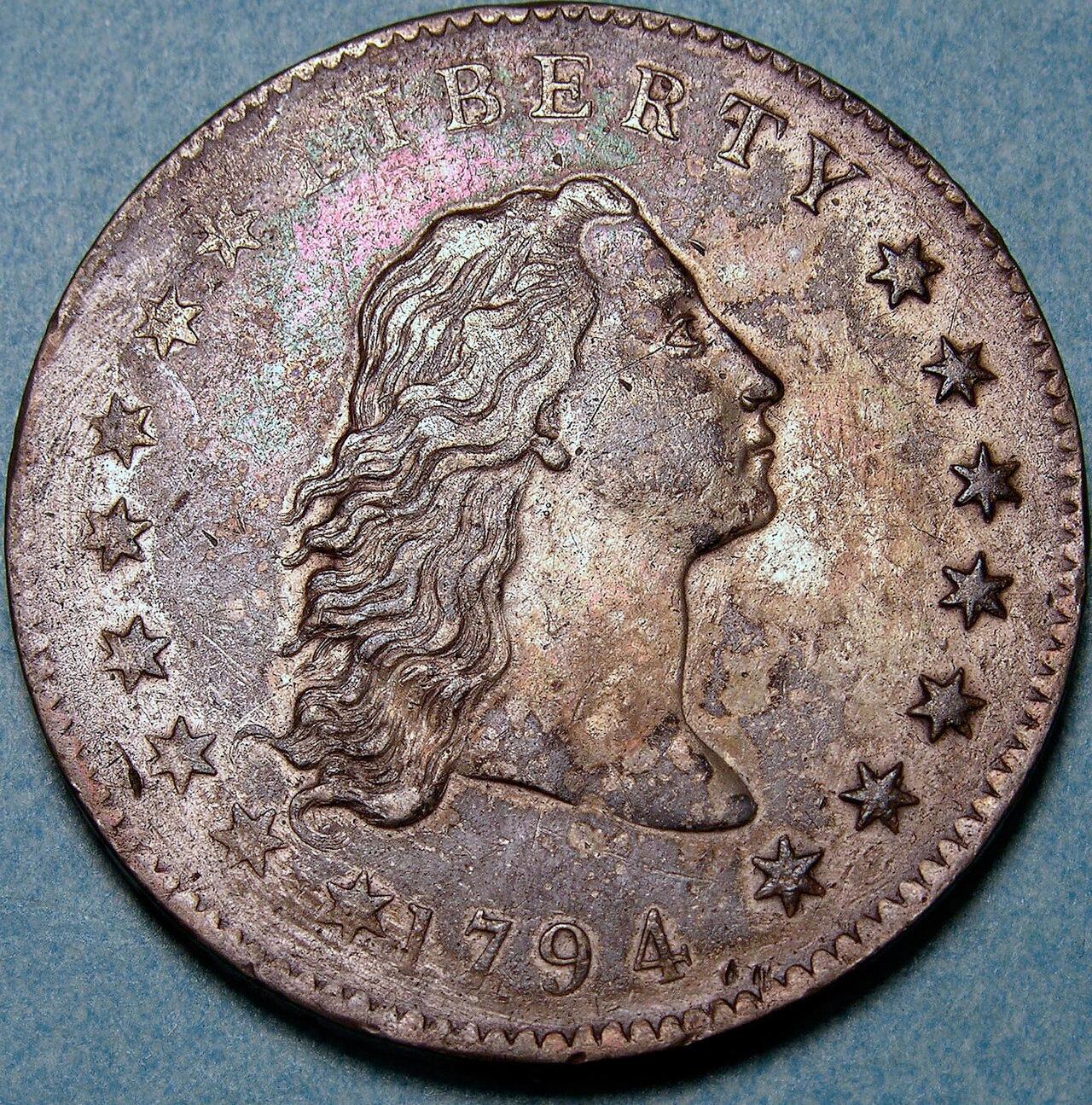
- 1794 Flowing Hair dollar, NGC MS-62+: A BB-1 example of the first U.S. silver dollar. Chief Coiner Henry Voigt delivered the year's 1,758 pieces on October 15, 1794. The coin was last sold by Stack's Bowers in the December 2020 Larry H. Miller Collection sale.
- 1862 Liberty Head double eagle, NGC Proof-65 Cameo: The Mint struck just 35 Proof $20 pieces in 1862, and the catalog says fewer than 15 seem to have sold that year. John Dannreuther's 2018 census confirms only nine survivors. Two are in the Smithsonian's National Numismatic Collection and one belongs to the American Numismatic Society.
- 1872 Amazonian half dollar pattern, PCGS Proof-66+: William Barber's seated Liberty with an eagle and shield, Judd-1200. Only about 10 silver strikings are confirmed, and this one is the highest graded at PCGS. It was in the 2021 Bob R. Simpson sale.


CoinWeek separately previewed lot 2088 from the same family: an 1838 Gobrecht dollar, Judd-85, graded PCGS Proof-65 with CAC approval. It is a plain-edge "cabinet coin" restrike that researchers date to about April 1869, and fewer than a dozen are known. When this coin last sold at Heritage's February 2013 Long Beach auction, graded NGC Proof-65, it brought $123,375.
An 1897 Barber half with 129 years of pedigree
The lot CoinWeek spotlighted on November 10 comes from Mack C. Chase rather than the Alabama family. Lot 2063 is an 1897 Proof Barber half dollar graded NGC Proof-68★ Cameo. The Mint struck 731 Proof halves that year, against 2,480,000 for circulation.
The provenance is the coin's real draw. John M. Clapp bought it directly from the Philadelphia Mint in November 1897, and his son John H. Clapp kept the collection together after his father died in 1906. In 1942 Louis E. Eliasberg Sr. bought the Clapp holdings through Stack's for $100,000. That was the price of the whole collection, not this coin. The half dollar then appeared in Bowers and Merena's April 1997 Eliasberg sale (lot 2079), passed through the Hugon Collection, and sold again at Heritage's January 2005 FUN sale (lot 4277) before Chase acquired it.

Population figures quoted from the Stack's Bowers catalog show how thin the top end is. NGC lists seven 1897 halves at Proof-68 Cameo, four of them with the star, and none higher. PCGS has three at Proof-68 Cameo and none finer.
Condition rarities from other consignors
The session also carries high-grade coins outside the two headline collections, according to the E-Sylum excerpts:
- 1877 Indian cent, PCGS Proof-66 RD Cameo: None graded finer by PCGS in the Cameo category. The circulation-strike 1877, with a mintage of 852,500, is the key to the series, and that rarity drives demand for Proofs.
- 1879 "Washlady" half dollar pattern, PCGS Proof-67 Cameo, CAC: Judd-1597 in silver. Twelve to 15 are known, and PCGS has graded two at this level with none higher.
- 1857-O half eagle, PCGS MS-61: The catalog places it third in Doug Winter's census of the issue. Stack's Bowers says its online archives going back at least 20 years include no Mint State example of the date.
What collectors should know
The Alabama family is not named in any of the coverage we reviewed, and none of it gives estimates. Bidders should read each lot's full description and provenance on the Stack's Bowers auction site. Several of these coins have changed hands many times. The 1792 half disme alone was offered on eBay more than once between 2012 and 2016, according to its catalog provenance.
See the coins at a show
The easiest way to see these lots in person is the Whitman Coin & Collectibles Expo in Baltimore. Public hours are noon to 6 p.m. Thursday, November 12; 10 a.m. to 6 p.m. Friday; and 10 a.m. to 4 p.m. Saturday. Admission is free, and visitors 16 and older need a government photo ID. Stack's Bowers viewing in Room 307 ends Friday. For other shows in the region, see the Maryland show listings. The 1897 Barber half last sold at a FUN show auction in January 2005, and the next FUN Winter 2027 show opens in Orlando on January 7.